In Nigeria market . this question is asked too much . so write one Blog to reply this question in system .
1 Lets see the Electronic supply system for the refrigerator from the house
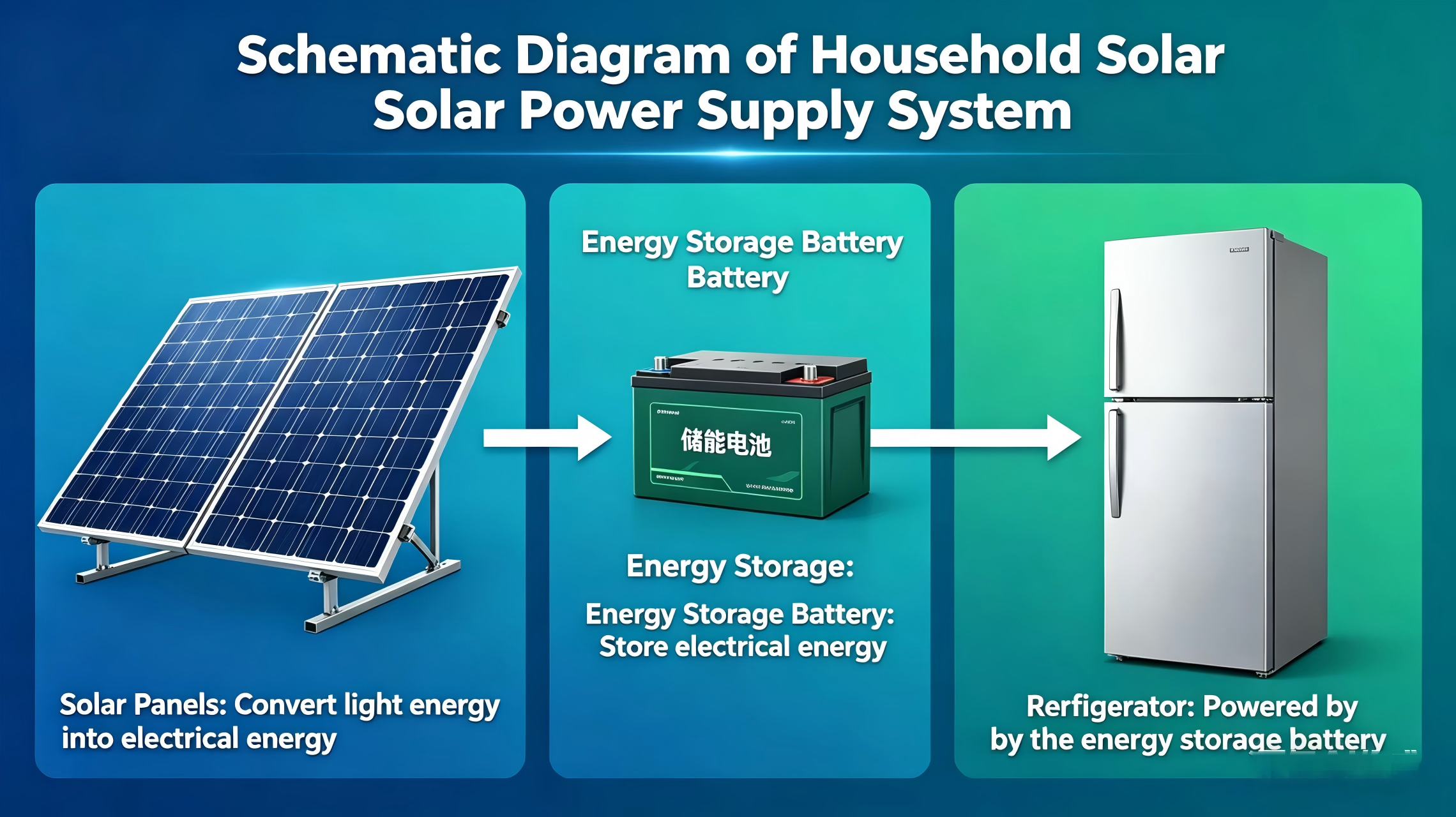
2 how much Electronic will be stored into the Battery
It will be up to your solar system and the Inverter , the whole solar system. most of the customer who ask this quesiton will equip the solar system. just they dont tell me the details
3 lets assume the full storage of the Battery capacity , then we will reply if the question
To determine whether a battery can power a refrigerator, you need to check three key things: the battery’s voltage, the battery’s capacity (Amp-hours/Ah) , and the refrigerator’s starting power (surge power) . The instantaneous power required to start a refrigerator is 5–7 times its normal running power — this is where most problems occur.
Follow these three steps. If you’re unsure about your battery’s specifications, feel free to tell me, and I can help you calculate.
📝 Step 1: Check the battery voltage (V)
This is the most basic matching condition. The battery voltage must match the input voltage of your inverter. Common voltages are 12V, 24V, or 48V. If they don’t match, the system simply won’t work.
⚡ Step 2: Check the refrigerator’s starting power (W)
A refrigerator’s momentary starting (surge) power is much higher than its rated running power. Your inverter needs to be able to handle this peak.
Find the rated power: Look at the nameplate on the back of your refrigerator. Find “Rated Power (W)” or “Input Power”. If it only shows current (A), use this formula:
Power (W) = Voltage (220V) × Current (A)
*A rough estimate: A typical household refrigerator (around 200 liters / 7 cubic feet) usually has a rated power between 100W and 200W.*Calculate the starting power: Multiply the rated power by 5 to 7 times to get the starting surge power.
Example: For a 150W refrigerator, the starting power could be as high as 1050W (150W × 7).
🔋 Step 3: Calculate the power your battery can provide
The amount of power your battery can deliver depends largely on the inverter you use with it.
Check your inverter’s specifications: Your inverter will show two key numbers:
Rated (Continuous) Power: The power it can supply steadily over time. This must be greater than the refrigerator’s rated power.
Peak (Surge) Power: The power it can handle for a very short moment (a few seconds). This must be greater than the refrigerator’s starting power.
A common mistake: You cannot just look at the battery’s capacity (Ah) . Capacity determines how long it can run, not whether it can start the refrigerator. The ability to start the refrigerator depends mainly on whether your inverter’s power rating is high enough.
A reference value: For a 12V system, to reliably run a typical household refrigerator, you usually need a pure sine wave inverter rated at 1000W or higher.
✅ Summary & Action Steps
Check your inverter (most important step): Look at your inverter’s specifications. Is its Peak Power greater than the refrigerator’s Starting Power? If yes, it can likely start the refrigerator.
Estimate runtime: If it can run the fridge, use this formula to estimate how long it will last:
Estimated runtime (hours) ≈ Battery capacity (Ah) × Battery voltage (V) × 0.85 ÷ Refrigerator rated power (W)The
0.85is an efficiency factor that accounts for inverter losses and the fact that a refrigerator cycles on and off.
Choose the right inverter (if you haven’t bought one yet): It is strongly recommended to choose a “Pure Sine Wave” inverter. It produces electricity that is identical to (or cleaner than) household grid power. This protects the refrigerator’s compressor, ensures quieter operation, and improves efficiency.
If you tell me your battery’s voltage (V) and capacity (Ah) , along with the power (W) or current (A) from your refrigerator’s nameplate, I can give you a direct yes/no answer and calculate the estimated runtime for you.