
Select The Smart BMS for the E-Tricycle ,Tuktuk
This is a real Case from my Nigeria customers . He want to buy 24pcs 100Ah battery to make one pack and he requires to provide the 24S 200A active Balance 2A BMS .after communication , then I know he want the pack for his 15pcs KEKE .so i asked him to send me the Motor and Controller specifications as below :
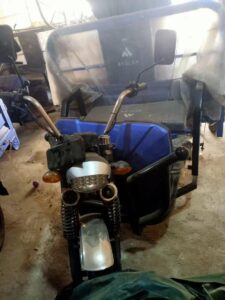
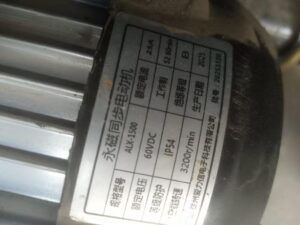
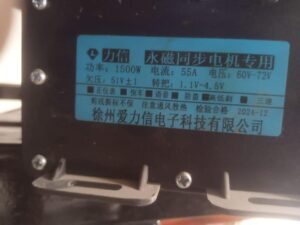
How to choose the good BMS for the keke Battery
Firstly pls Remember one core rule as below :
Match the cell type and series quantity first → Calculate current accurately → Ensure 4 basic protection functions → Choose balance & temperature functions by application scenario → Finally check communication protocol and workmanship
Below is the step-by-step detailed explanation :
1. Confirm Basic Battery Information (Must calculate first)
1) firstly Cell Type (The most critical factor)
- NCM Ternary Lithium: Nominal voltage 3.7V per cell; Overcharge: 4.20–4.25V; Over-discharge: 2.5–2.8V
- LFP Lithium Iron Phosphate: Nominal voltage 3.2V per cell; Overcharge: 3.65–3.70V; Over-discharge: 2.5–2.8V
- Must use a dedicated BMS for the corresponding battery chemistry. Do not mix use.
2) Secondly Series Quantity (S) (Determines total voltage & BMS model)
- 12V ≈ 4S (LFP) / 3S (NCM)
- 24V ≈ 8S / 7S
- 48V ≈ 16S / 13S
- 60V ≈ 20S / 16S
- The BMS must fully match the cell series number (e.g., 16S battery only uses a 16S BMS)
3) Thirdly confirm the Capacity (Ah)
Decides the balance current and heat dissipation redundancy of the BMS.
2. How to Choose Current Rating
1)firstly confirm the Continuous Discharge Current (Core parameter)
- Electric vehicles: ≥ Controller current limit × 1.2
(Example: 20A current limit → choose 25A or above)
- Energy storage / Inverter: ≥ Inverter power ÷ Minimum battery voltage × 1.2
- Formula: I=P÷Vmin×1.2
2) Secondly confirm Peak Current
Generally select 2 times the continuous current (BMS supports short-time peak load).
3) Thirdly confirm the Common Port vs Split Port
- Common Port (2 wires): Charge & discharge share one port, simple wiring, cost-effective; suitable for low current (≤30A)
- Split Port (3 wires): Separate charge and discharge circuits, better heat dissipation, longer service life; suitable for medium & high power (≥40A)
3. Protection Functions: 4 Basic Protections Are Mandatory
- Overcharge Protection: Automatically cut off charging when single cell voltage reaches the threshold
- Over-discharge Protection: Automatically stop discharging when voltage drops below the limit
- Over-current Protection: Fast cut-off within ≤200ms once current exceeds the set value
- Short Circuit Protection: Instant cut-off (microsecond level) to prevent fire
Finally the Additional Essential Functions (Power Battery & Energy Storage)
- Temperature Protection: Charging range 0–45℃, Discharging range -20–60℃; system shuts down when overheating
- Cell Balancing (Crucial for battery lifespan)
- Passive Balancing: Low current (30–100mA), low cost; for small capacity batteries (≤20Ah) with small voltage difference
- Active Balancing: High current (≥1A), high efficiency; for large capacity batteries (≥50Ah), large voltage difference & long lifespan requirements; controls voltage difference within 10–20mV and extends battery life by over 20%
4. Model Selection by Application Scenario
1) Low Current (≤30A): Power Tools / Light E-scooters / 12V Energy Storage
- Type: Common port, hardware BMS, passive balancing
- Series: 4S / 8S / 13S / 16S
- Current: 20A / 30A
2) Medium Current (40–100A): E-motorbikes / Tricycles / 48V Energy Storage
- Type: Split port, hardware & software combined, active balancing (for ≥50Ah)
- Series: 13S / 16S / 20S
- Current: 60A / 80A / 100A
3) High Current (≥150A): Electric Vehicles / High-power Energy Storage
- Type: Split port, smart BMS, ≥1A active balancing, CAN communication
- Series: 16S–24S
- Current: 150A / 200A / 300A
5. Common Mistakes & Avoidance Tips for Beginners
- ❌ Wrong series BMS (e.g., 16S battery with 13S BMS) → Permanent battery damage
- ❌ Underrated current → Frequent protection triggering, overheating, burnt board
- ❌ Mix NCM & LFP BMS → Abnormal overcharge/over-discharge, battery bulging & fire hazard
- ❌ Only focus on low price ignoring workmanship → Falsified specs & failed protection
6. Quick Selection Template (Direct Application)
Our Curent Case: 72V 100Ah LFP 24S E-KEKE, controller current limit 55A
- Cell type: LFP → Choose dedicated LFP BMS
- Series quantity: 24S → Adopt 24S BMS
- Current: 55A×1.2=66A → Select 80-100A split port BMS
- Balancing: 80Ah → 0.8A-2A Active Balance is sufficient
- Temperature: Mandatory charge & discharge temperature protection
- Communication: Optional Bluetooth APP (monitor voltage / current / temperature)
Above is the basic step and acknowledge, Hope it can support you . Anyway if you have any question, pls contact me
info@hzhim.com